We Scraped a COVID Helpline Out of WhatsApp
An NGO helpline number flooded one employee's personal phone in April 2021. Three of us spent an evening turning it into a queue. 297 people over sixteen days.
India's second COVID wave hit in April 2021, driven by Delta and far worse than the first. Delhi was in the middle of it. On 24 April the city reported 24,103 new cases and 357 deaths, its highest single-day toll of the pandemic. More than a third of everyone getting tested was coming back positive.
Hospitals there were publicly counting how many hours of oxygen they had left. On 23 April, 25 patients died at one of them when its supply ran out. By 1 May the country was recording more than 400,000 cases a day, the highest daily count anywhere in the world at any point in the pandemic.
The formal system stopped answering, so people went looking for anybody who would. Over 350,000 of them were coordinating on Twitter under tags like #CovidSOS. States were publishing bed availability as low-quality PDFs. A volunteer told Rest of World their sheets needed constant updating because beds run out in 20 minutes.
One of the groups doing that was an NGO that had put out a helpline number for anyone who needed COVID help. There was no call centre behind it. It was an employee's personal phone.
The number got forwarded around, and the messages kept coming. One person's WhatsApp ended up sitting between families and oxygen.
WhatsApp is not a queue. It is a list of chats sorted by whoever typed last. You cannot sort it by city, mark one as handled, or hand half of it to somebody else.
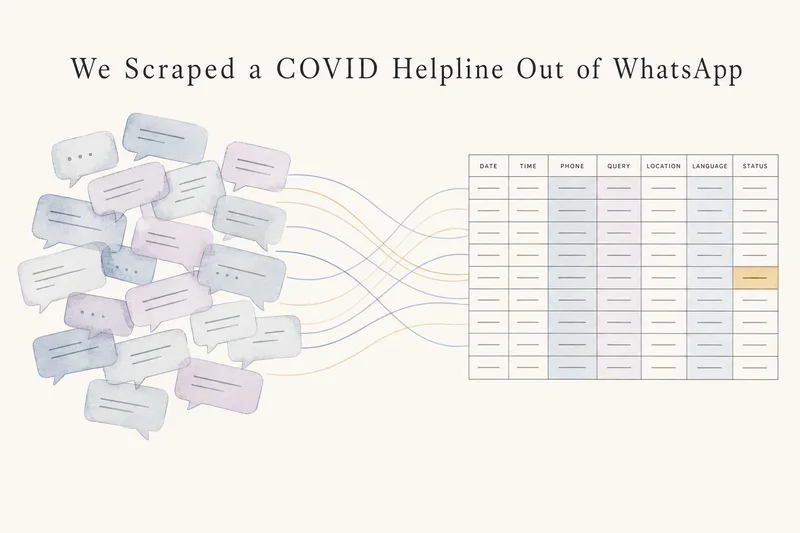
We wrote a Chrome extension on the night of the 24th. You click it once and it starts opening every chat in the list, one after another, copying out the number and everything that person had written. When it gets to the bottom it starts again at the top. It never stops.
While it is running you cannot use that WhatsApp yourself, because the script is busy clicking through the chats.
Everything it pulled out went into a shared Google Sheet, one row per person.
There were no LLMs to call, so sorting the messages meant matching keywords. Eight categories. When nothing matched, the whole message went through to a person rather than a guess.
The part I still like is that the misspellings are in there next to the correct ones. Injection matched inje, remdesiv and ramdesiv. Ambulance matched ambulance and ambulence. Nobody types carefully at a moment like that.
On 25 April, the first full day it ran, 111 people showed up.
That was the backlog, all the people who had written in before any of this existed. You cannot count a WhatsApp inbox by looking at it, so until it finished its first pass there was no way to know how many were waiting.
Over sixteen days the sheet collected 297 people across 12 states. 138 of the requests got a category, oxygen and hospital beds the two biggest. The longest entry runs 1,627 characters, one family's whole conversation in a single cell.
Another 150 had text and no category. Some never name what they need. Some are greetings, or two words asking for an update. Twenty-one are in Hindi, including someone asking whether fever with chills could be corona. One person wrote that they had been given this number for help in Delhi and had not been told what kind of help there was. Every one of those went through to a person to read.
One man was writing about his wife's HRCT report and said her levels were moving between 88 and 92. A blood oxygen saturation of 88 is an emergency. He typed the number that mattered and never typed the word oxygen, so the keywords went past him and the whole message went to a person instead.
What the tool did was turn one phone into a list. Several people could open it at once and split it up by city.
Ours was one of thousands of small tools built that month by whoever happened to be able to write code. It was rough and it was not built to last. That was fine. It was for right then.
I am glad we got asked. Somebody needed exactly the thing we happened to know how to do. Five years on, it is still the best use I have put any of it to.
Related reading
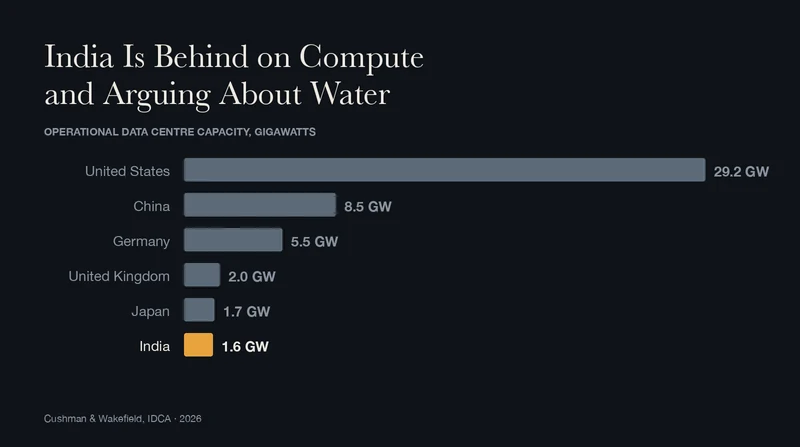 India Is Behind on Compute and Arguing About WaterAug 2026
The data centre panic in India is mostly imported, and the number at the centre of it is wrong.
Think Ladakh Itinerary: 10 Days, Leh to SrinagarJul 2026
Our day by day Ladakh route through Pangong, Hanle, Umling La, Lamayuru, Drass and Sonmarg. What we did, what it cost, and what we got wrong.
Travel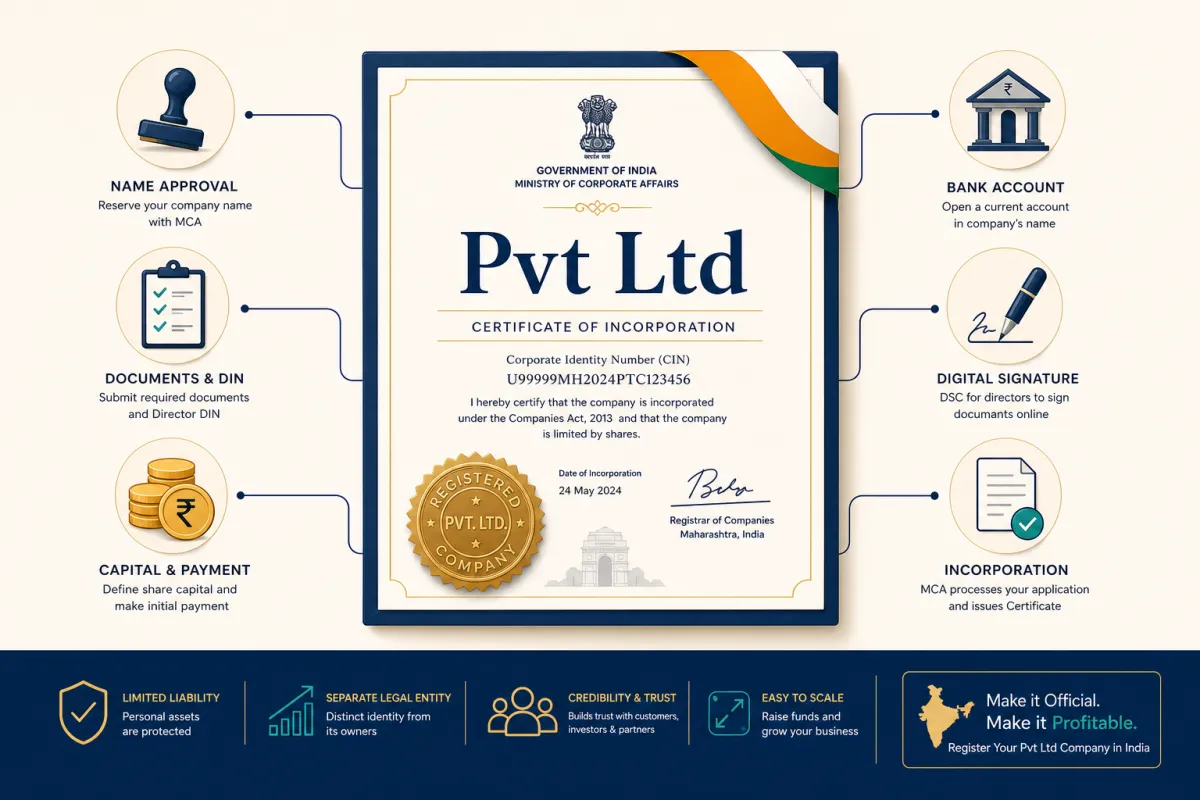 How to Register a Pvt Ltd Company in India, the Right WayJun 2026
A founder's plain-English guide to registering a Private Limited company in India, plus the auditor and Form 20-A deadlines that catch first-timers.
Work