My 2025: shipping, signal, and a few uncomfortable rules
A candid review of 2025 into 2026.
2025 was a year of output and motion. I shipped a lot, traveled a lot, and learned fast. It was also a year where I got clearer about what doesn't work for me - especially when it comes to focus and the kinds of commitments I allow into my life.
What I'm proud of
1) I kept shipping, even when the ideas changed. I launched a bunch of small things and experiments - some quick, some slow - and I'm glad I didn't stop building just because everything wasn't perfectly aligned. A few examples:
- I shipped a prompts library (Promptsmint) - 100+ Daily Users - and continued improving it as a real asset.
- I launched a couple of micro-builds (small tools, mini-products) that helped me practice distribution + iteration.
- I shipped an iOS app that took longer than expected, but I stuck through the slower "finish it" part.
2) My AI + product instincts leveled up. This year I got materially better at building AI/agent-like workflows and turning them into interfaces that feel usable. Less "demo energy," more "someone could actually use this daily." That shift matters.
3) I had a lot of real-world fun (and it wasn't a distraction). I did Mumbai/Goa, a long Bali trip, and a month in Thailand/Vietnam, plus a few shorter trips. See more on Instagram. Travel didn't magically solve anything, but it consistently reset my brain and gave me energy. That's valid.
4) Reading came back. I restarted reading and it stuck. It gave me a calmer baseline and better thinking. Quietly one of the highest ROI habits I picked up.
What didn't work (and I'm done pretending it will)
1) Fragmentation kills me. I can handle intensity. I don't handle too many parallel streams well. When projects + plans + people all demand attention at once, my output drops and my mental state follows.
2) Some relationships/commitments were a net negative. Not naming specifics, but here's the rule I earned the hard way: If a relationship isn't net positive - energy, stability, and support - it doesn't deserve a long trial period. I don't mean "perfect." I mean: if it repeatedly costs focus and creates stress without adding something real back, it's a no. I've learned to exit earlier instead of negotiating with my own future.
3) Activity ≠ progress. I did a lot. But the gap between "busy" and "moving toward the goal" is real. Some of my confusion came from winning small battles while the bigger direction stayed fuzzy.
The patterns I noticed (the honest ones)
- When I start my day reactive, I lose the day.
- When I compound one thing weekly, things move fast.
- When my boundaries are weak, my focus becomes a shared resource - and I lose.
- When I build things that are user-facing and practical, I'm in my zone.
What I'm taking into 2026
I'm keeping the plan simple:
- Fewer bets, more compounding. One main asset, weekly progress, no constant resets.
- More public artifacts. Small, frequent proof of work beats occasional big announcements.
- Protect focus like it's a job requirement. Deep work blocks are not optional.
- Health + reading stay steady. They make everything else easier.
If you want to do your own yearly review, I wrote the exact framework I use here: The Yearly Review (Simple + Actually Useful).
Related reading
 The Yearly Review (Simple + Actually Useful)Jan 2026
A simple yearly self-review framework that's easy to do, easy to repeat, and easy to look back on later. No journal habit or fancy tracking required.
Personal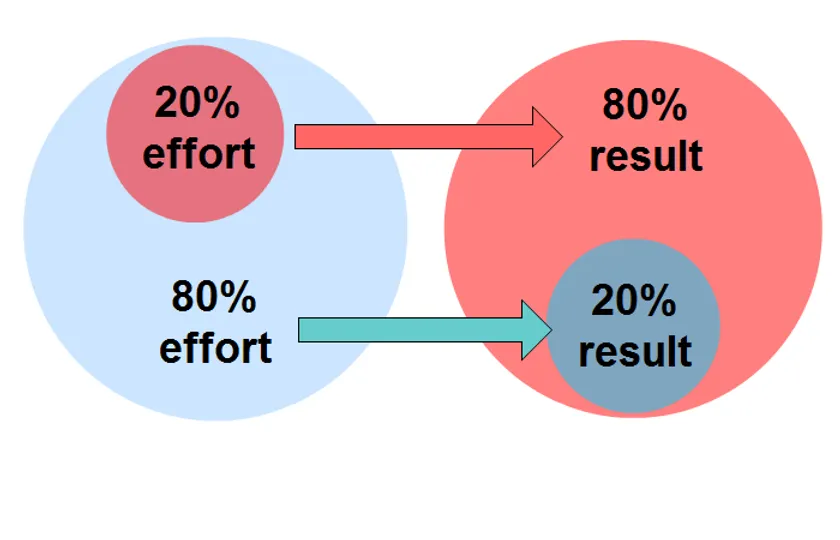 The 80/20 RuleMar 2024
The Pareto principle, and how to apply it to work and life instead of just quoting it.
Personal![Setting Up Mac for Development [May 2026]](/_next/image?url=%2Fcontent%2Fblogs%2Fmac-setup-2026.png&w=3840&q=75) Setting Up Mac for Development [May 2026]May 2026
Setting Up Mac for Development [May 2026]May 2026The current toolkit and the AI coding stack I'd put on a fresh Mac today. A year after my 2025 setup.
Engineering