Shooting the Milky Way on an iPhone in Ladakh
iPhone 16 Pro Max, a tripod and 30 second exposures at Pangong and Hanle. What a phone actually gets you under a Bortle 1 sky, and what it doesn't.
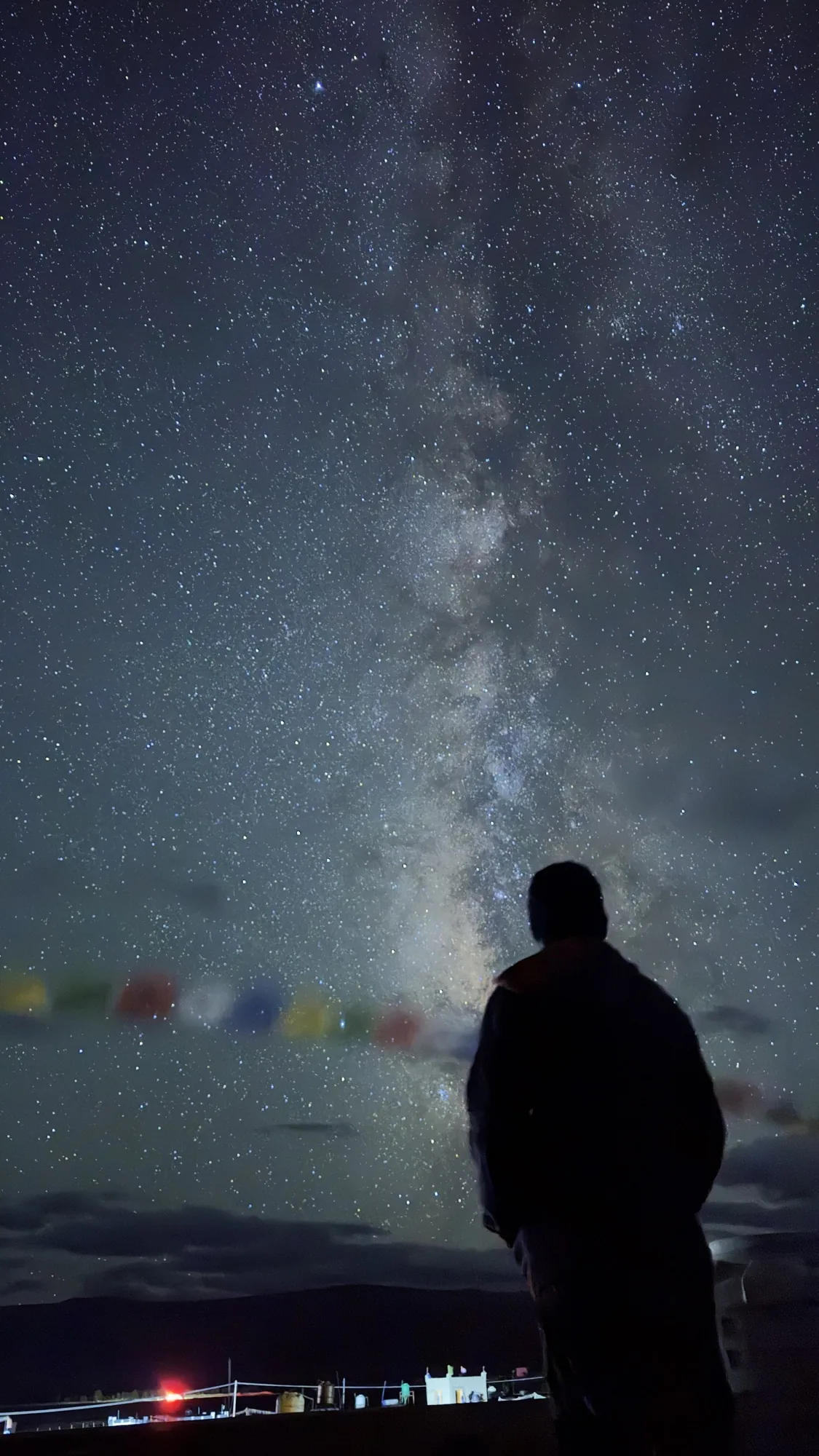
Most astrophotography writing about Ladakh assumes you're carrying a full frame body and a star tracker. I wasn't. I had an iPhone, a tripod and an Apple Watch, and I came back with the Milky Way core from both Pangong and Hanle.
Here's the whole setup, and the one thing that mattered more than any of it.
The setup
- iPhone 16 Pro Max
- The stock Camera app. No third party app, nothing paid
- A tripod. Not optional. This is the entire trick
- 30 second exposure, shot in the dark
- ProRAW, 48MP
- Apple Watch as the shutter, optional
Six things, and one of them is optional. I never opened a third party app.
The tripod is what unlocks the long exposure in the first place. The phone detects that it's sitting still and lets night mode run far longer than it ever will in your hand. Handheld I got a couple of seconds and a smear. On a tripod the phone let night mode run the full 30.
I shot ProRAW at 48MP, which left far more room to pull detail out of the core afterwards than the processed JPEGs did.
The watch solved a real problem: a 30 second exposure is ruined by the tap that starts it. Firing from the watch meant never touching the phone at all. The built in timer would have done the same job.
Wait past midnight
I got the Milky Way core at both Pangong and Hanle, but only one of those was straightforward.
Pangong is at 4,350 m with a Bortle 2 to 3 sky. On paper that's a step down from Hanle. In practice it was completely fine. This one is ISO 1600, which tells you how much light was actually there.
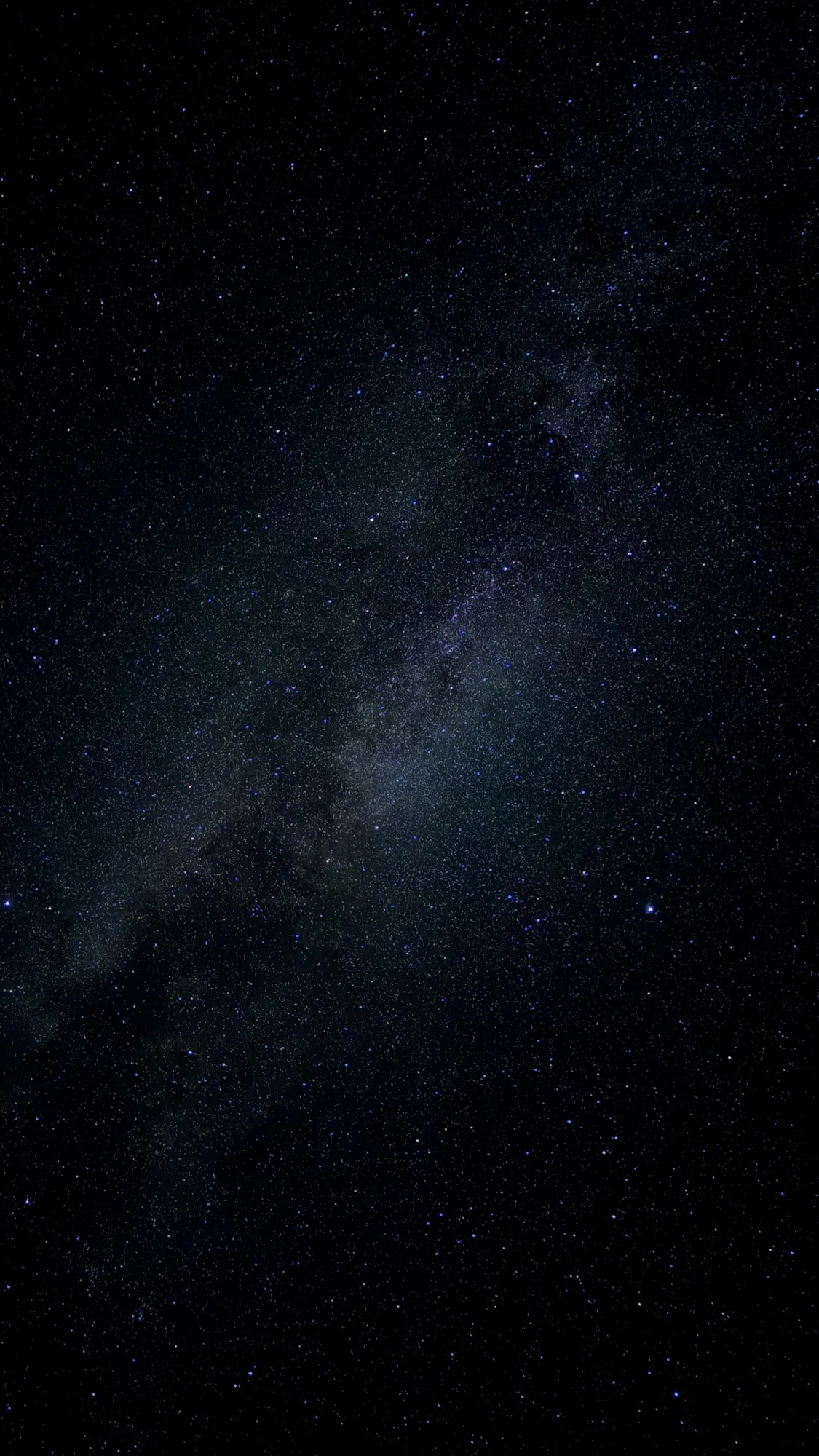
Hanle is the one I'd actually planned the trip around. 4,500 m, a Bortle 1 sky, which is the darkest classification there is, and India's first legally protected dark sky reserve. The whole village runs on warm low lumen lighting and blackout curtains.
And it was clouded over both nights.
The first night was the worse of the two. We went out and tried anyway, and got a few frames out of it despite the cloud, which was more than it looked like we'd get.
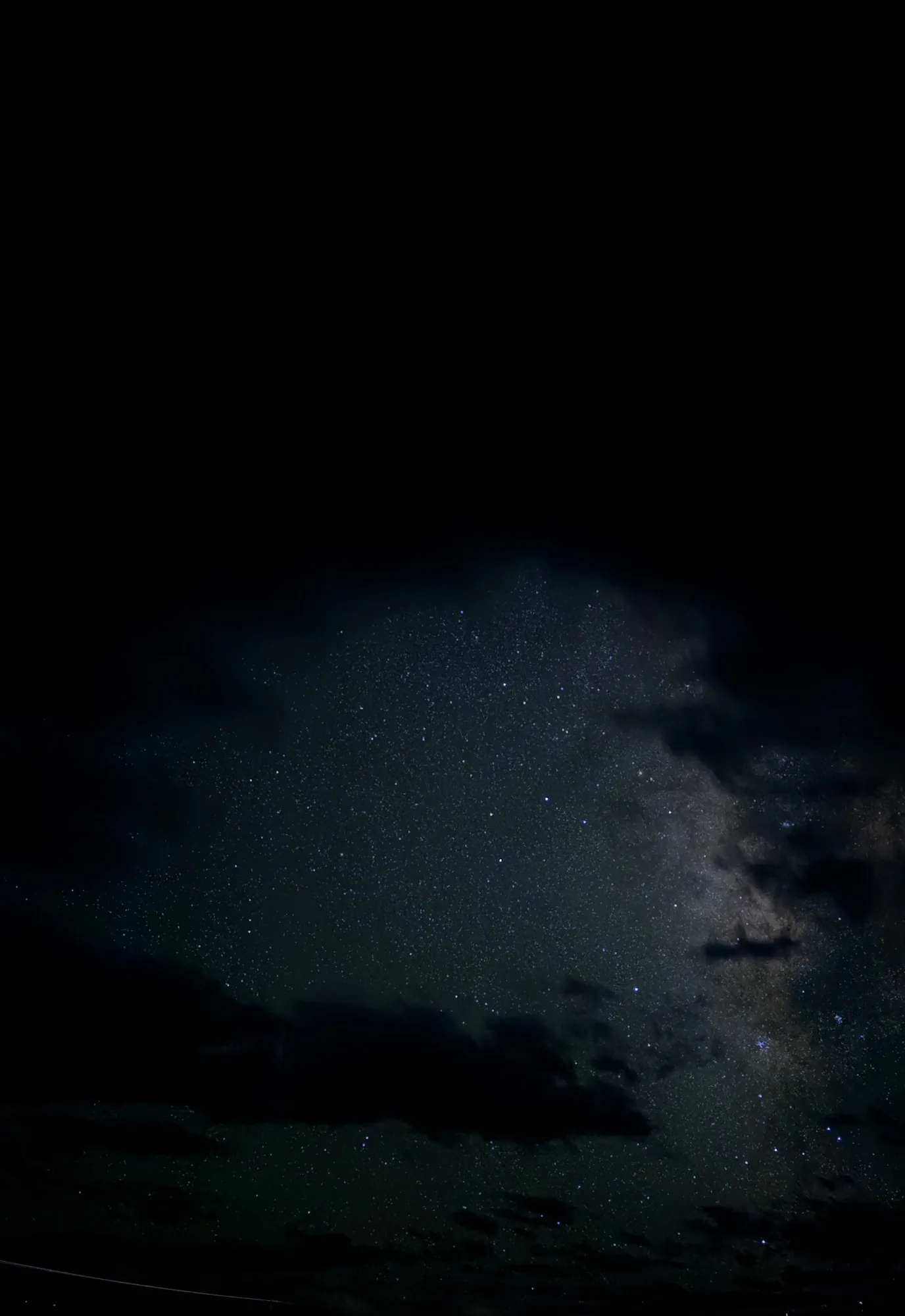
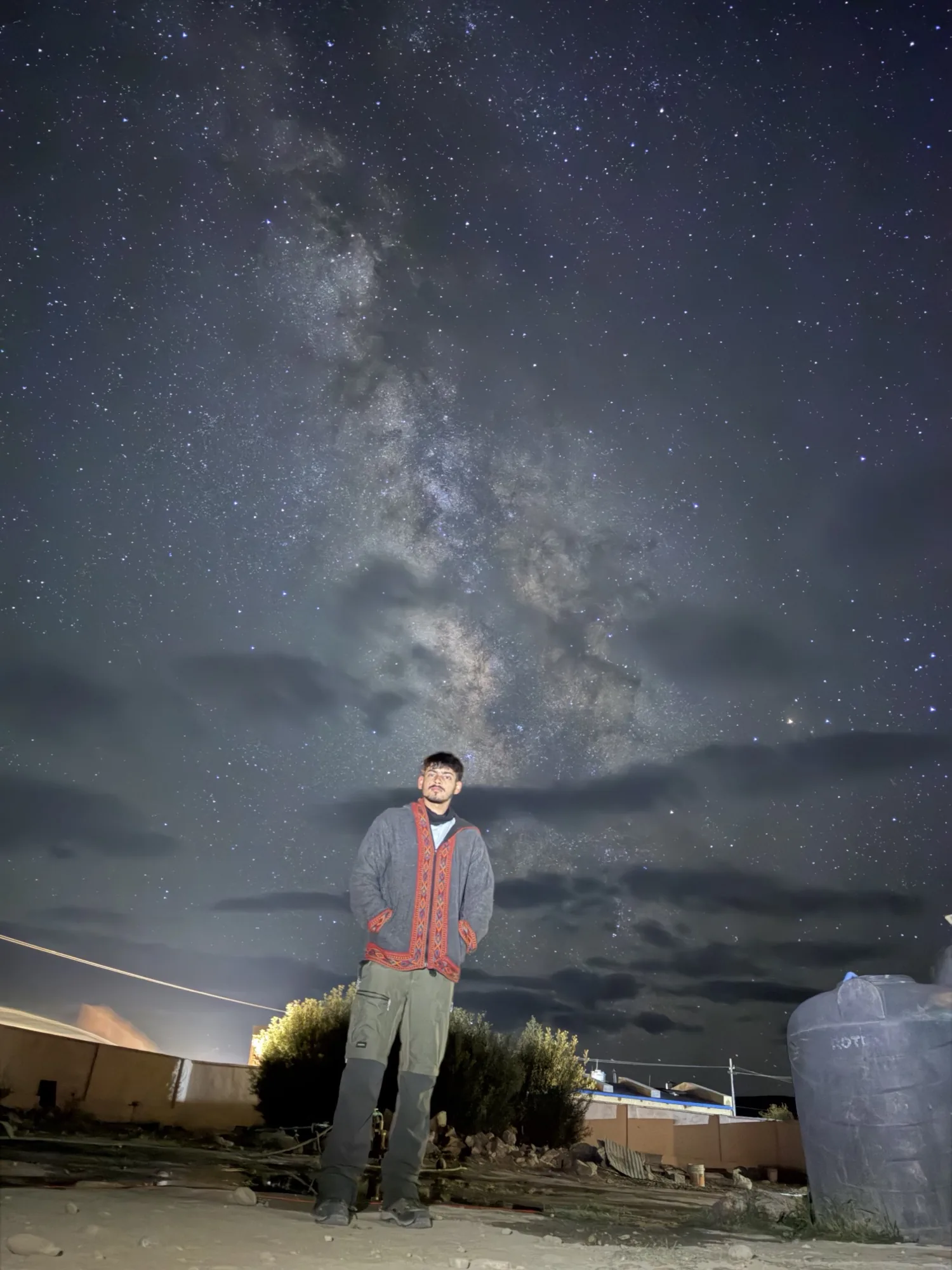
Left, night one, the core just about breaking through. Right, the ambassador's shot on night two, still fighting cloud.
The second night we lost the telescope session to it. The village has trained local astronomy ambassadors running 8 inch scopes, and there was nothing to point them at. We were staying at Padma when Hanle House called to say one of the astronomy ambassadors had turned up. No telescope use that night, but he was shooting the Milky Way himself. We went over and paid ₹200 each for a few frames and a group photo. Insurance, in case the sky never opened.
Then around midnight it did clear. We went up to the Padma rooftop and shot it ourselves.
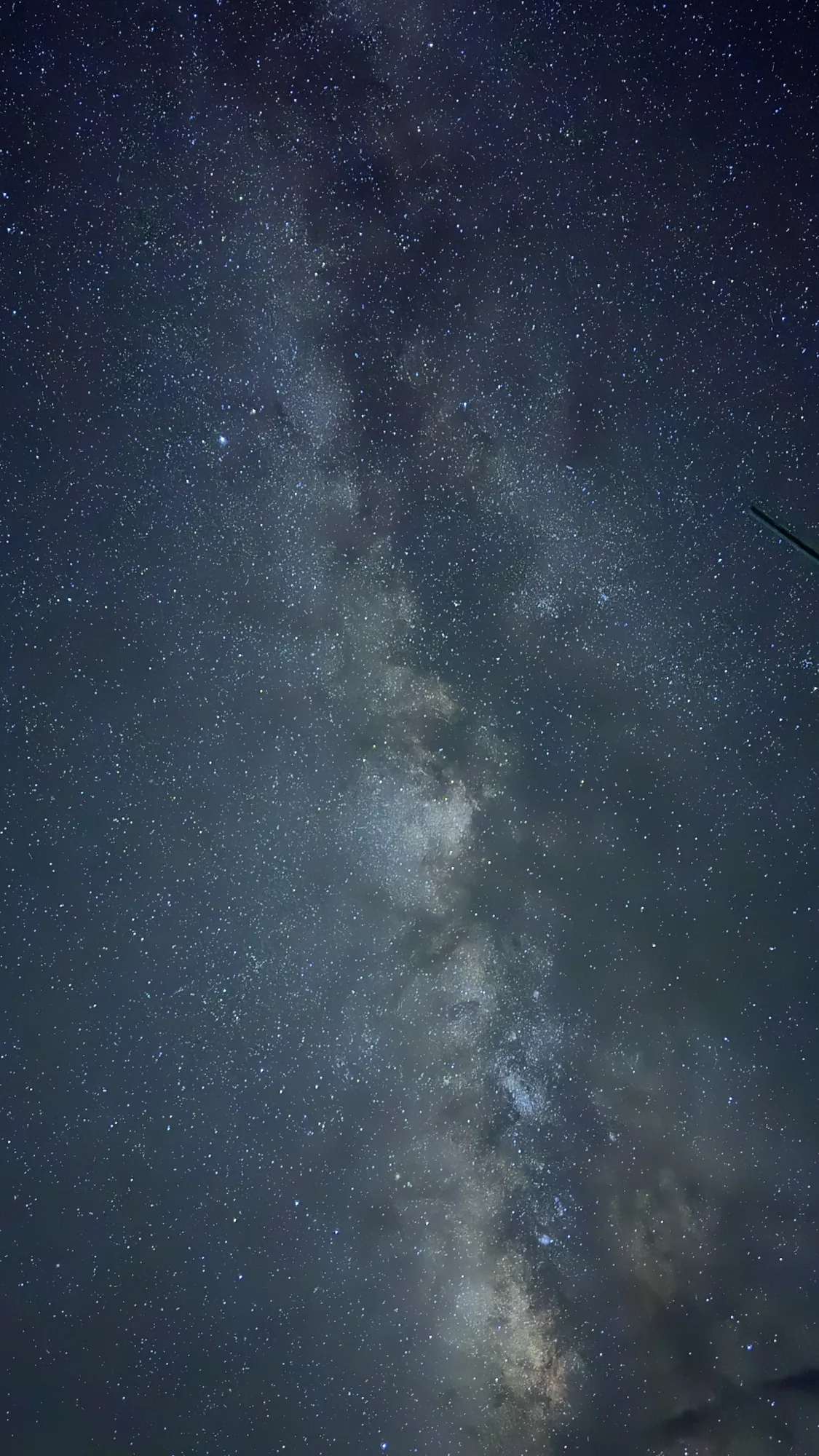
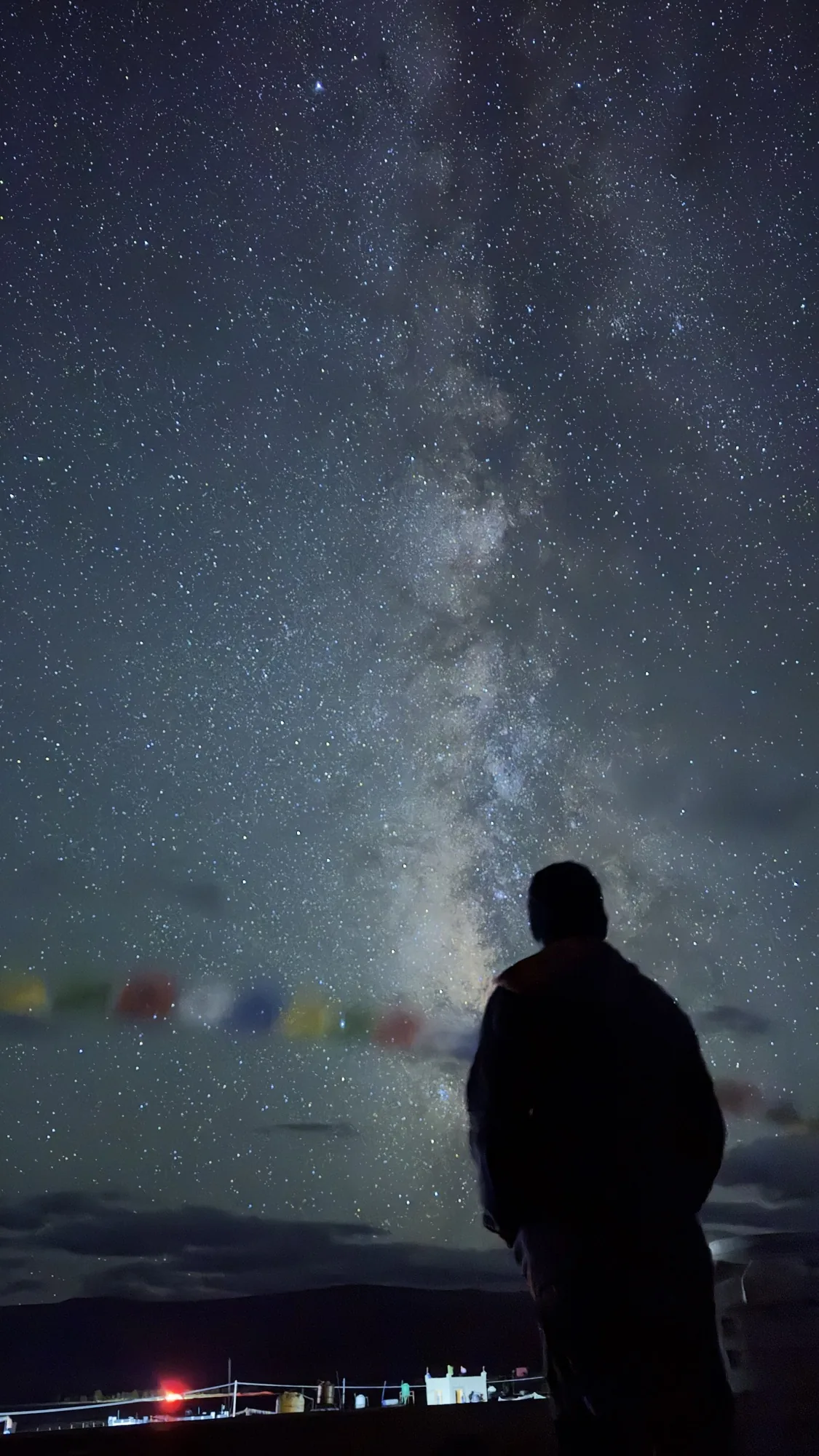
At Hanle I was at ISO 8000 against ISO 1600 at Pangong, which is the phone working a lot harder for a sky that was, on paper, darker. That's the cloud.
That's the lesson I took. Don't call it off at 10 PM. Both Hanle nights looked finished by evening and both of them gave us something later.
We ran Stellarium to find the core. It works offline, which matters because Hanle has no signal worth relying on.
The three shooting nights were also the only cold ones of the trip, and even then it never went below about 5°C. We packed far more winter clothing than we used.
What ruined our shots
Not the sky. Light on the ground, and more of it than I expected.
Hanle is a protected dark sky reserve, so I'd assumed this would be a non-issue there. It wasn't. There was construction going on with work lights running, and cars moving around the village. Both of those killed frames. A single car turning while your 30 seconds is running writes headlights straight across the shot.
We hit the same thing at Pangong.
What worked was putting distance between us and whatever was lit. You can see it in the rooftop shot above, that strip along the bottom of the frame is the village.
White light at Hanle isn't only bad for your frame, it's against the dark sky rules there.
What a phone gets you, honestly
It gets you the Milky Way core over a real landscape, wide field, close to how the sky actually looked.
It doesn't get you: deep sky objects. No nebulae, no galaxies beyond the core, nothing that needs magnification or stacking or tracking.
Andromeda or the Ring Nebula need a telescope. Hanle has trained local astronomy ambassadors running sessions on 8 inch scopes, which is a different activity from photographing the sky yourself. We had one and lost it to the clouds.
The phone wasn't the limiting factor on this trip. Cloud cost me more frames than the hardware ever did.
The full route, with drive times, permits and costs, is in the Ladakh itinerary.
Related reading
 Ladakh Itinerary: 10 Days, Leh to SrinagarJul 2026
Our day by day Ladakh route through Pangong, Hanle, Umling La, Lamayuru, Drass and Sonmarg. What we did, what it cost, and what we got wrong.
Travel Sri Lanka Itinerary: 5 Days, Kandy, Nuwara Eliya and BentotaSep 2026
Our route through Kandy, Nuwara Eliya and Bentota in January 2024. Where we stayed and how we got between them.
Travel 16 Days in BaliAug 2026
Sixteen nights across Canggu, Ubud, Gili Trawangan and Seminyak in mixed dorms, working through parts of it. Where I stayed, what I did, and what it cost.
Travel